You can reduce anxiety in the moment by slowing your breathing and by cutting back on caffeine, nicotine, and alcohol. Regular exercise, facing what you avoid in small steps, and building cognitive behavioural therapy (CBT) skills can lower anxiety further over time. If anxiety is running your days, York Addiction & Mental Health can help. We also advise you to contact your healthcare provider, or reach out to a therapist or counsellor for support.
Please note that anxiety is not a character flaw, and you didn’t choose to have or suffer from anxiety. Anxiety is simply the body’s alarm system being too loud, and interrupting you when it doesn’t need to. It’s like a fire alarm going off accidentally while cooking, alerting you even though there is no real threat. The goal isn’t to switch it off; it’s to turn the volume down, hopefully to a level so low you can get on with your life.
Anxiety is common, and many people go without help | But how do you reduce it?
Anxiety shows up in a lot of lives. In 2022, 5.2% of Canadians aged 15 and older met the criteria for generalized anxiety disorder in the past 12 months. That is double the 2.6% measured in 2012, and among women aged 15 to 24 it was 11.9%. Those figures come from a national survey that applies diagnostic criteria, so they are not clinical diagnoses.
Many people do not get help. Among Canadians who met the criteria for a mood, anxiety, or substance use disorder, 48.8% had talked to a health professional about their mental health in the past year, and about 1 in 3 reported unmet or partly met needs for care.
Some anxiety is normal. Anxiety that is more severe, lasts longer, and gets in the way of daily life is a different matter. It is also treatable.
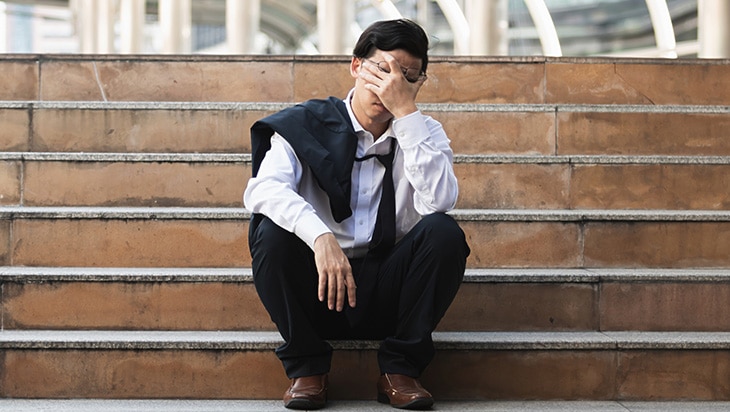
What can help in the next few minutes?
Five quick steps can help in the moment: slow your breathing, avoid the fixes that backfire, check for a medical cause, ground yourself, and tell someone.
Slow your breathing. Breathe in gently through your nose, then breathe out more slowly than you breathed in. Keep going for a few minutes. A 2023 meta-analysis of 20 randomized trials found breathing practices were linked with small-to-medium reductions in anxiety symptoms compared with control groups. Most of the studies carried a moderate risk of bias, and the samples were small, so the authors urged caution.
Skip the fixes that backfire. Too much caffeine or nicotine can bring on panic attacks. Alcohol may calm you for a short time, but it tends to make anxiety worse afterward. Cannabis can raise anxiety too, and some people report severe anxiety or panic after using it.
Check what your body is telling you. Anxiety can cause a racing heart, chest tightness, and shortness of breath. Panic attacks can also have medical causes, such as thyroid, heart, or breathing problems. If you have chest pain or trouble breathing, or you are not sure, get urgent medical help instead of assuming it is anxiety.
Center yourself with meditation and use grounding techniques. When you’re experiencing anxiety, it can be hard to stop focusing on that specific feeling or thought. The physical symptoms can be difficult to push out. We recommend completing a meditation or a grounding exercise. This shifts the focus from the anxiety itself to your body, your senses, your surroundings, and more. This exercise lets you take in the physical feelings around you rather than being consumed by the anxious thoughts or physical manifestations of the anxiety.
Tell one person. Message or call someone you trust and say how you are feeling. If there is no one to call, the helplines near the end of this post are free and open around the clock.
Why avoiding what scares you keeps anxiety going
Avoidance is the most natural response to anxiety. It also works, for a few hours. Avoiding a feared situation brings quick relief, but it can make the anxiety feel much bigger when you finally have to face it. Avoidance can also bring sadness, guilt, shame, and frustration.
The way out is called exposure: gradually and repeatedly facing feared situations, starting with the easier ones. Avoiding them prevents you from learning that they are not as dangerous as you think. Build a “fear ladder,” with steps ranked from less scary to more scary, and plan each step to be prolonged and repeated. You will feel anxious while you do it. That is normal, and the anxiety usually eases with repetition.
Pace matters. If your fears are tied to trauma, or the steps feel too big, ask a counsellor or therapist to guide you.

Four skills that may help lower your anxiety over a few weeks
A simple order for self-help looks like this.
- Learn about anxiety. Understanding what it is and what keeps it going is the first step.
- Learn to relax. Slow breathing, covered above, is one option.
- Challenge anxious thoughts. It takes time to shift anxious thinking, so be patient and practise consistently.
- Face your fears. This is the final and most important step. It is the exposure work described above.
Habits that can raise or lower anxiety
Exercise. A 2023 study found that physical activity reduced anxiety symptoms compared with usual care, with a medium effect. Aerobic exercise, strength training, yoga, and other types all helped, and moderate or higher intensity was linked with bigger improvements. Shorter programs showed larger effects than very long ones.
There are limits. Most of the reviews were rated low quality, fewer looked at anxiety than at depression, and the evidence is strongest for mild-to-moderate symptoms. Pick movement you will actually do, and start where you are. Check with your doctor first if you have a health condition.
Caffeine and nicotine. Limiting alcohol and caffeine is standard self-care advice for panic attacks, and too much caffeine or nicotine can trigger them.
Alcohol and cannabis. If you drink or use to take the edge off, the relief is short. Research shows this approach tends to make things worse and raises the risk of problems with alcohol and other substances.
Does “natural” anxiety relief work?
People search for how to reduce anxiety naturally because they want to avoid medication. The strategies in this post are the non-medication options with the most support: exercise, breathing, cutting back on caffeine, nicotine, and alcohol, and CBT skills. Supplements and herbal products are a separate question, and this post makes no claims about them. If you are thinking about one, ask a pharmacist or your doctor first, especially if you take prescription medication.
Therapy for anxiety: CBT and free options in Ontario
CBT teaches you to notice and change the patterns of thinking and behaviour that keep anxiety going. It is one of the most studied therapies for anxiety. A 2018 meta-analysis of 41 placebo-controlled trials with 2,843 participants found a moderate benefit over placebo across anxiety-related disorders. A 2022 update found smaller effects in more recent trials, driven mostly by PTSD research. CBT is not a magic fix, and results vary by person and by condition.
In Ontario, adults 18 and older with symptoms of depression or an anxiety-related disorder can access free, publicly funded CBT through the Ontario Structured Psychotherapy Program. Services range from self-led strategies with coach support to weekly one-on-one or group therapy. It is not suitable for everyone, including some people with complex needs. Tell your doctor or health care team you are interested, or look up your regional network. Some regions also accept self-referrals.
Medication is another option. A doctor or psychiatrist can explain the benefits and risks for your situation. Do not stop prescribed anxiety medication suddenly; talk to your prescriber first.
When life feels like too much
Everyday anxiety is uncomfortable. Sometimes it becomes more than that: you cannot cope, you stop doing things that matter, or dark thoughts creep in. Reaching out early is a sensible way to take it seriously.
Get support soon if anxiety:
- shows up most days and lasts for weeks
- keeps you from work, school, or relationships
- makes you avoid more and more places or situations
- leads you to drink or use substances to get through the day
- comes with panic attacks, low mood, or hopelessness
When anxiety and substance use are tangled together
Anxiety and substance use often travel together. Many people reach for alcohol or other substances because they want to change the way they feel. The relief is short, and the problem can grow. Talking with a professional about both can help you find the right mix of support.
If this sounds familiar, York Addiction & Mental Health provides integrated treatment for anxiety alongside substance use. Call 1-888-241-3391 or reach out through our contact page, and our team can talk through what support might fit.
Next steps to stopping your anxiety
Pick one thing from this article and do it this week. Maybe that is a ten-minute walk, cutting your afternoon coffee, or writing down one thing you have been avoiding and the smallest first step toward it. If anxiety is taking up more of your life than you want it to, book an appointment with your family doctor or a therapist, or look into receiving treatment and programming. York Addiction & Mental Health is here to help. You do not have to wait until it gets worse.
FAQs
-
How can I reduce anxiety quickly?
Slowing your breathing is a well-supported quick tool: breathing practices are linked to small-to-medium drops in anxiety symptoms. It also helps to skip caffeine, nicotine, and alcohol, which can make anxiety and panic worse. Quick steps can take the edge off, but they do not treat the cause. If anxiety keeps coming back, talk to a doctor or therapist.
-
How can I reduce anxiety naturally?
Well-supported options that do not involve medication are regular physical activity, slow breathing, cutting back on caffeine, nicotine, and alcohol, and cognitive behavioural therapy (CBT). Exercise is the easiest to start and was found to reduce anxiety symptoms compared with usual care. This post does not cover supplements or herbal products, so ask a pharmacist or doctor before taking them, especially alongside prescription medication.
-
How do I know if my anxiety is a disorder?
Some anxiety is a normal part of life. An anxiety disorder involves anxiety that is more severe, lasts longer, and gets in the way of daily life. Generalized anxiety disorder means frequent, persistent worry about several things for at least six months, plus other symptoms. Only a health professional can diagnose it. Please seek medical diagnosis and intervention if this sounds like you.
-
What kind of therapy helps anxiety?
Cognitive behavioural therapy (CBT) is a well-studied therapy for anxiety. A 2018 study found a moderate benefit for the treatment of anxiety. In Ontario, adults 18 and older with anxiety or depression can access free, publicly funded CBT through the Ontario Structured Psychotherapy Program. It is not suitable for everyone, so ask your doctor or health care team.
-
Does alcohol reduce anxiety?
Alcohol can feel calming for a short time, but it often makes anxiety worse afterward, and using it to cope can lead to bigger problems. Cannabis can also increase anxiety for some people. If you notice you are drinking or using to get through anxious moments, that is worth talking about with a health professional.
If you or someone you know is in crisis
- Call or text 9-8-8 (Suicide Crisis Helpline, Canada, 24/7). If there is immediate danger or a medical emergency, call 911.
- For help finding mental health and addiction services in Ontario, call 1-866-531-2600 (free, confidential, 24/7) or text CONNEX to 247247.